Meanwhile, most shoppers aren't walking onto your lot to "browse." They've already done that online. A fragmented marketing approach — a little SEO here, a boosted Facebook post there — leaves real revenue sitting on the table when inventory is this high and competition for attention is this fierce.
This guide breaks down what dealership marketing actually means today, the strategies proven to move inventory faster, and how to pick the right mix for your store's budget and goals.
Key Takeaways
- Integrate SEO, paid ads, social/video, email, and reputation into one system—not scattered campaigns
- Win the research phase with local SEO and a fast, mobile-first website before buyers ever call
- Convert browsers into showroom visits with personalized email, retargeting, and geofencing
- Tie KPIs to vehicle sales, not clicks, to separate dealerships that grow from those that stall
What Is Car Dealership Marketing?
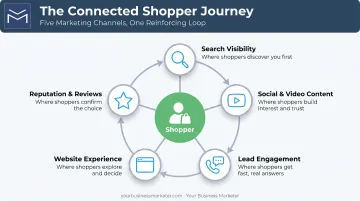
Car dealership marketing is the set of tactics used to attract, engage, and convert vehicle shoppers into buyers and service customers. The strongest programs run as one connected system across multiple channels.
That system typically spans:
- Search visibility (SEO and paid)
- Social and video content
- Lead engagement (email, SMS, calls)
- Website experience
- Reputation and reviews
Each channel reinforces the others. A shopper might see a Facebook video, search your dealership name on Google, check your reviews, then land on your website, all before ever picking up the phone.
That behavior isn't rare. 95% of vehicle buyers use digital information sources during their shopping process, and research from Google's automotive study found shoppers were twice as likely to start their research online as at a dealership.
If your digital presence is thin, inconsistent, or outdated, you're losing shoppers before they ever see your lot. The strategies below break down exactly how dealerships are turning that online research into showroom traffic and sales.
Top Car Dealership Marketing Strategies That Drive Sales
The strategies here were selected on three criteria: proven return on investment, ability to reach shoppers who are actively in-market, and adaptability across every stage of the buyer's journey: from first search to final signature.
Local SEO & Google Business Profile Optimization
Local SEO is the practice of optimizing your dealership's online presence so you rank when nearby shoppers search terms like "used trucks near me" or "[city] Chevy dealer." Ranking in Google's Map Pack (the block of three local results with a map) directly drives foot traffic, since those listings sit above most organic results.
Local rankings matter for a simple reason: most buyers research online before they purchase, so a dealership that doesn't rank nearby is invisible at the exact moment shoppers decide where to go. Unlike paid ads, which stop the moment you stop paying, SEO compounds. Rankings you earn this year keep working next year.
| Aspect | Details |
|---|---|
| Key Tactics | Optimized Google Business Profile, location-specific landing pages, long-tail vehicle keywords, mobile-first site structure |
| Best For | Dealerships wanting sustainable, lower cost-per-lead traffic that reduces reliance on paid spend |
| Typical Timeline | 4-12 months for meaningful ranking movement, according to Semrush's SEO benchmarks, with results compounding from there |
YBM's two-year campaign for a rural Chevrolet dealership shows what sustained SEO investment looks like in practice: 29 keywords reaching first-place rankings, alongside 626 online leads and 305 dealership visits over the same period.
High-Converting, Mobile-First Website
Your website is your digital showroom. It's the first impression for every shopper who clicked a search result, tapped a social ad, or Googled your name after seeing your truck on the highway. The site needs to be built around what the shopper wants to do — find inventory, check pricing, get pre-qualified — not what you want them to click.
Speed matters more than most dealers realize. In Google's research analyzing over 11 million mobile ad landing pages, moving load time from 1 second to 10 seconds increased predicted bounce probability by 123%, according to Google's mobile page speed benchmarks. Automotive pages were among the slowest categories tested. A slow inventory page costs you the lead before you ever know they visited.
| Aspect | Details |
|---|---|
| Must-Have Features | Fast load speed, clear CTAs, high-quality vehicle imagery, limited pop-ups, easy-to-find inventory |
| Best For | Converting existing SEO and paid traffic into actual leads |
| Common Pitfall | Overloading pages with lead forms or pop-ups that create friction before a visitor engages |
A site that loads slow or buries inventory behind three clicks doesn't just frustrate shoppers — it wastes every dollar you spent getting them there in the first place.
Paid Search, Geofencing & Programmatic Advertising
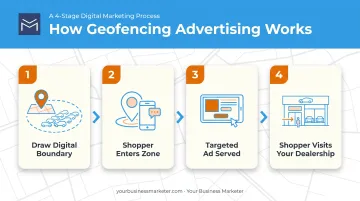
PPC, geofencing, and programmatic display work together to intercept in-market shoppers at the exact moment they're deciding where to buy. Search ads catch people actively typing "best price on [model]." Geofencing lets you draw a digital boundary around a location (a competitor's lot, a busy shopping center, even an auto show) and serve ads to anyone who steps inside it.
This combination targets intent, not just demographics. A shopper standing on a competitor's lot is about as "in-market" as it gets. Rather than relying on unverified click-through claims, the smarter approach is testing location-based targeting against your own dealership's baseline campaigns and tracking cost per qualified visit.
| Aspect | Details |
|---|---|
| Ad Types | Search PPC, geofencing, retargeting display, programmatic video |
| Targeting Method | ZIP-code/demographic targeting, competitor conquesting, location-based retargeting |
| Ideal Use Case | Moving specific aging inventory or capturing shoppers cross-shopping nearby dealers |
YBM's programmatic work for a rural Chevrolet dealership generated 1.34 million ad impressions over two years as part of an integrated campaign that also drove 626 leads — proof that reach and conversion can move together when campaigns are managed daily rather than set and forgotten.
Social Media & Video Marketing
Short-form video and consistent social posting build trust before a buyer ever sets foot on your lot. A 30-second walkaround video showing real mileage, real interior wear, and an honest answer to "does this have any accident history?" does more for buyer confidence than a stock photo ever could.
The numbers back this up: Google's automotive shopper study found that more than 40% of shoppers who watched a vehicle video went on to visit a dealership. That's a direct line from content to showroom traffic.
| Aspect | Details |
|---|---|
| Content Types | Vehicle walkarounds, testimonials, staff Q&As, showroom/community content |
| Best Platforms | Facebook, Instagram, YouTube |
| Posting Cadence | Weekly, minimum, using scheduling tools to maintain consistency |
A mix of original content, third-party shares, and promotional posts keeps feeds from feeling like a nonstop sales pitch. YBM's work with a five-location Wisconsin Buy Here Pay Here dealership group combined social with PPC and email, driving a 40% increase in website traffic within 30 days and a 36% year-over-year lead increase.
Email & SMS Lead Nurturing
Segmented email and text campaigns keep leads warm between the first click and the final sale. A shopper who requested a price quote but didn't buy this week isn't gone. They're just not ready yet. Drip campaigns, service reminders, and CRM-triggered alerts keep your dealership top of mind until they are.
Email in particular delivers strong returns. Litmus's 2025 State of Email survey found that 35% of marketing leaders reported $10 to $36 back for every $1 spent, with another 30% seeing $36 to $50 back. Generic blasts don't get those numbers. Personalization based on browsing behavior and CRM data does.
| Aspect | Details |
|---|---|
| Key Tactics | Drip campaigns, service reminders, personalized post-test-drive follow-ups, CRM-triggered alerts |
| Best For | Nurturing undecided leads and retaining past buyers for service and repeat purchases |
| Key Metric | Open rate and reply/appointment conversion rate |
Online Reputation & Review Management
Proactive review generation and response is core trust-building, especially as consumer skepticism toward sales tactics stays high. Every unanswered negative review is a silent "no" to the next shopper reading it.
BrightLocal's 2025 Local Consumer Review Survey found that 27% of consumers now rely on just one review site before deciding whether to trust a local business — up from the year before. That means one bad Google listing with no responses can cost you a shopper before they ever call.
| Aspect | Details |
|---|---|
| Key Actions | Ask for reviews immediately post-sale/service, respond within 24-48 hours, monitor auto-specific review sites |
| Platforms to Monitor | Google, Facebook, and dedicated auto review sites |
| Impact | Higher perceived trust and improved local SEO ranking signals |
Responding to every review, good or bad, signals to future buyers that someone's actually paying attention. YBM's dealership clients have maintained reputation scores as high as 4.63 out of 5 through consistent monitoring and response.
How to Choose the Right Marketing Mix for Your Dealership
The most common mistake dealerships make? Chasing every new channel that a vendor pitches, without ever tracking which ones actually move vehicles off the lot. TikTok this quarter, a new PPC vendor next quarter, a reputation tool the quarter after. Nobody can say which one is actually working.
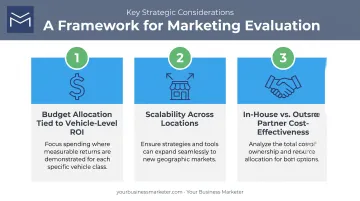
Evaluate your mix against three factors:
- Budget allocation tied to vehicle-level ROI. Track sold units back to marketing spend—not impressions or clicks.
- Scalability. Confirm the approach works for a single rooftop and a five-location group alike.
- In-house vs. outside partner cost-effectiveness. Internal teams often handle content well but lack bandwidth for daily paid-channel optimization.
Dealerships increasingly want one accountable partner instead of five vendors sending five different reports that never agree with each other. Fragmented reporting makes it nearly impossible to tie ad spend back to actual sales.
YBM's CLEAR program for car dealerships is built for that problem: SEO, programmatic advertising, paid social, and reputation management under one KPI-driven strategy, with daily optimization instead of a "set it and launch it" approach.
Conclusion
The dealerships winning right now aren't necessarily the ones spending the most. They're the ones connecting the right strategy to the right stage of the buyer's journey and measuring results against real sales, not vanity clicks.
Reassess your marketing mix regularly. What worked two years ago at $6 a day on Facebook might need a completely different approach today with inventory levels where they are. Treat your strategy as something you tune monthly, not something you set once and forget.
If you're ready to talk through a full-service dealership marketing plan built around measurable revenue growth, reach out to Your Business Marketer. We'd be glad to walk through what's working right now for dealerships like yours.
Frequently Asked Questions
What is dealership marketing?
Dealership marketing is the combination of digital and traditional tactics dealerships use to attract, engage, and convert vehicle shoppers into buyers and service customers. It spans SEO, paid ads, social, email, and reputation management working together.
What is the best marketing strategy for a car dealership?
No single tactic wins alone. The strongest results come from combining local SEO, a fast-converting website, and targeted paid and social campaigns, all measured against actual vehicle sales rather than clicks or impressions.
How much should a dealership spend on marketing each month?
Spend varies by market size and inventory volume, but the principle stays constant: allocate toward your highest-converting channels and keep reserve budget available for fast pivots when a campaign underperforms.
How long does it take to see results from local SEO for a dealership?
SEO typically takes 4-12 months to show meaningful ranking movement, depending on your market and competition. Results compound over time, unlike paid ads that stop the moment spending stops.
Should a dealership handle marketing in-house or hire an agency?
It depends on volume and expertise. Many dealers keep a lean internal team for local content and customer stories while partnering with a specialized agency for paid media, SEO, and data-driven campaign optimization.
What KPIs should dealerships track to measure marketing ROI?
Track lead volume, cost per lead, and cost per sale at minimum. Ideally, push toward VIN-level tracking that ties specific ad spend back to individual vehicles sold, not just overall traffic numbers.