That's the reality of pest control marketing: it's almost entirely reactive. Nobody plans ahead for termites. This urgency creates a strange rhythm for owners — leads flood in during spring and summer, then dry up by December, leaving many wondering which marketing dollars are actually driving bookings and which are just noise.
This guide breaks down a practical approach: building a solid strategic foundation, winning local search and paid ads, creating content that converts, turning customers into repeat business, and expanding reach through community and offline efforts — plus how to budget across all of it.
Key Takeaways
- Google Business Profile and local SEO carry the most weight since customers search the moment pests appear, not before
- Local Services Ads paired with organic content deliver fast leads now and cheaper traffic later
- Reviews, referrals, and email marketing turn one-time jobs into recurring contracts — often the real profit driver
- A 70:20:10 budget split keeps spending balanced between proven tactics, growth channels, and experiments
Lay the Foundation: Build a Winning Pest Control Marketing Strategy
Know Who You're Targeting and Why You're Different
Before spending a dollar on ads, define who you're actually chasing. Residential homeowners searching for same-day ant treatment behave very differently than a restaurant group needing monthly rodent-prevention contracts.
Pin down your specialty and your edge:
- Termite, bed bug, or wildlife specialists vs. general pest control
- Residential-only, commercial-only, or both
- A clear differentiator: 24/7 emergency response, eco-friendly treatments, or a satisfaction guarantee
Set Goals You Can Actually Measure
Are you chasing new customer volume or trying to convert one-time jobs into renewed contracts? Each path needs its own tactics and metrics.
Tracking where leads originate matters more than most owners realize. Web lead tracking and call tracking log form submissions, inbound calls, and unique callers, so you can see which channel actually books jobs instead of guessing from gut feel.
Budget With the 70:20:10 Framework
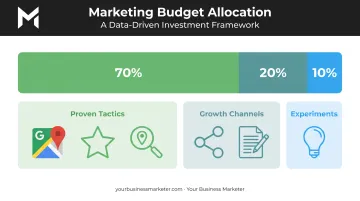
A simple way to allocate spend without overthinking it: put roughly 70% toward proven tactics (Google Business Profile, reviews, local SEO), 20% toward complementary channels like social and content, and 10% toward experiments.
The 2025 NPMA/PCO Bookkeepers pest control industry cost study found participating pest firms invested an average of 6.6% of revenue in marketing and advertising. Treat that as a real-world benchmark, not a hard rule. Your ideal number depends on growth targets and current retention.
Own Local Search: SEO, Google Business Profile & Paid Ads
Google Business Profile Is Your First Impression
When someone spots a wasp nest, your Google Business Profile is often the first thing they see. A fully built-out profile with accurate hours, real photos, listed services, answered FAQs, and thoughtful review responses can be the difference between a booked job and a scroll-past.
Local search urgency is well documented. Google's own consumer research found 50% of smartphone local searchers visited a store within a single day, and 18% of those searches led to a same-day purchase, according to Think with Google's "I-Want-to-Go" research. That study is retail-focused and dated, but it captures the same reactive behavior pest control owners see daily.
Local SEO Beyond Your Profile
Ranking organically takes more than a profile. You need location-specific service pages ("Termite Control in [City]"), neighborhood keyword targeting, and a website that loads fast on mobile. Nobody's waiting eight seconds on a slow site while ants march across their counter.
One documented example: a termite control company reportedly ranked No. 1 for "Termite Control Ventura," dominated searches across more than 10 nearby cities, and grew organic phone calls 125% through focused local SEO work. Results like that take sustained effort, not a one-time fix.
Local Services Ads and Paid Search Work Together
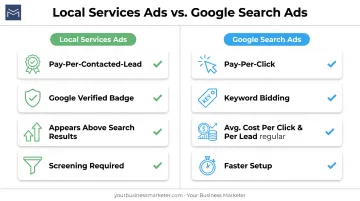
Google Local Services Ads (LSAs) appear above regular search results and organic listings, carrying a Google Verified badge after you pass Google's screening process. You pay per contacted lead, not per click — and pest control is an eligible category.
Traditional Google Search Ads work alongside LSAs rather than replacing them. You bid on specific keywords like "bed bug exterminator," and costs add up fast. Home & Home Improvement search ads averaged $8.33 per click and $90.92 per lead in recent WordStream benchmarking, with conversion rates around 8.05%.
Lead marketplaces like Thumbtack or Angi can supplement these channels, but check the math first. You often pay for a lead whether or not it turns into a booked job.
Running GBP optimization, local SEO, LSAs, and search ads at once is a full-time job. That's why many pest control owners hand the stack to a partner instead of juggling five dashboards.
YBM's HIVE program for home services bundles SEO, Google Ads, paid social, geofencing, and programmatic in one managed program. Daily optimization tracks booked customers, not just clicks, so you spend time treating homes rather than managing ads.
Create Content That Converts: Blogs, Video & Social Media
Blogs and Video Build Trust Before the Call
Homeowners search "how to get rid of ants" or "how to get rid of bed bugs" long before they're ready to hire. Answer those queries on your blog and you build authority while capturing traffic early. Free tools like Google's Keyword Planner show search volume for these phrases so you write what people actually look for.
Video does something blogs can't: it lets a stranger see the technician before letting them into their home. Before-and-after treatment clips, quick technician introductions, and pest identification walkthroughs build trust fast.
Facebook, Instagram & TikTok Tactics
A complete Facebook page with a working booking button, seasonal tips, and before-and-after photos keeps you visible between service calls.
On Instagram and TikTok, short educational or entertaining clips work best in Story Highlights. Add a Linktree-style bio link that points straight to booking so casual scrollers become leads.
Reliable content ideas that consistently perform:
- Pest identification guides ("Is that a termite or a flying ant?")
- DIY prevention tips homeowners can try before calling
- Seasonal content (spring ants, fall rodents)
- Customer testimonials and before/after results
- Live Q&A sessions answering common pest questions
A handful of well-planned posts each month beats sporadic bursts. Repurpose one video into a blog post, a few social clips, and an email feature to stretch your content budget without extra production work.
Turn Customers Into Advocates: Reviews, Referrals & Email Marketing
Reviews Are Your Digital Word-of-Mouth
Trust matters for a service that involves strangers entering someone's home. Recent survey data backs this up: 97% of consumers read reviews for local businesses, and 41% say they always check reviews before choosing one, according to BrightLocal's 2026 Local Consumer Review Survey.
Automate review requests via text or email right after service completion. Timing matters: customers are most responsive immediately after a job well done.
Respond to every review, positive or negative, professionally and promptly. A thoughtful reply to a one-star review often does more for credibility than a dozen five-star ones sitting unanswered.
Referrals, Email, and Recurring Plans Build Real Profit
Pest problems rarely stay confined to one house. Ants, mice, and termites spread across neighborhoods, so a formal referral program offering credits or discounts to both the referrer and the new customer capitalizes on that pattern.
Email marketing should segment by pest type and season:
- Spring ant-prevention reminders
- Fall rodent-proofing offers
- Win-back campaigns for customers who've gone quiet
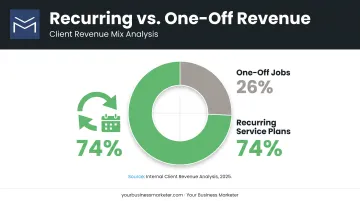
Recurring service plans are the strongest retention play available. Industry cost data shows recurring revenue made up 74% of total income across 246 pest management firms studied in the 2025 NPMA/PCO Bookkeepers report. One-off jobs alone rarely build a sustainable book of business.
Modern field service and CRM platforms can automate review requests, referral tracking, and email campaigns together, cutting the manual admin that eats into an owner's week.
Amplify Your Reach: Community Partnerships, Offline Branding & Choosing a Marketing Partner
Referral pipelines don't have to come only from past customers. Real estate agents, property managers, and landscapers regularly encounter pest issues and can send steady work your way. On the commercial side, restaurants, hotels, and healthcare facilities need recurring contracts, not single visits. That mix is a much stickier revenue base than residential jobs alone.
While those partnerships feed new work, offline branding keeps your name visible between jobs:
- Vehicle wraps and branded uniforms build passive visibility every time your truck is parked on a job
- Branded magnets, wristbands, or tote bags left behind after service act as long-term reminders in the home
- Door hangers and direct mail to neighbors after a completed job take advantage of the fact that pest issues rarely stay isolated to one property
Running local SEO, paid ads, content, reviews, and community outreach all at once stretches most owners thin. That's the gap full-service partners fill. YBM's HIVE program has driven measurable results for home services clients, including an 85% revenue increase over two years for a Northeast Ohio HVAC contractor through combined SEO, PPC, email, and reputation management.
That same playbook fits pest control companies that want a done-for-you digital strategy while offline and community efforts run alongside it.
Frequently Asked Questions
How do you market pest control?
Effective pest control marketing combines an optimized Google Business Profile and local SEO with high-intent paid ads like Local Services Ads and Google Ads. Add consistent reviews, helpful content, and referral or retention programs to cover the full funnel.
Is selling pest control profitable?
Profitability depends heavily on recurring service contracts, since they lower customer acquisition costs and stabilize revenue. Efficient scheduling and upselling additional treatments further protect margins.
What does the 70:20:10 rule mean in advertising?
It's a budget allocation framework: roughly 70% goes to proven, core tactics, 20% to newer complementary channels, and 10% to experimental or unproven ideas.
How much should a pest control company budget for marketing?
Budgets vary by company size and growth goals, but many pest control firms land around 5–8% of revenue, with ~6.6% often cited as a common benchmark for marketing and advertising.
What is the fastest way to generate pest control leads?
Google Local Services Ads and paid search deliver the fastest results because they target people actively searching for help right now, unlike organic content, which builds momentum over months.
How long does it take to see results from pest control marketing?
Paid ads can generate leads within days to a few weeks as campaigns calibrate. SEO, content, and review-building typically take several months of consistent effort before compounding into steady organic traffic.